

1.4 The Price of Gold
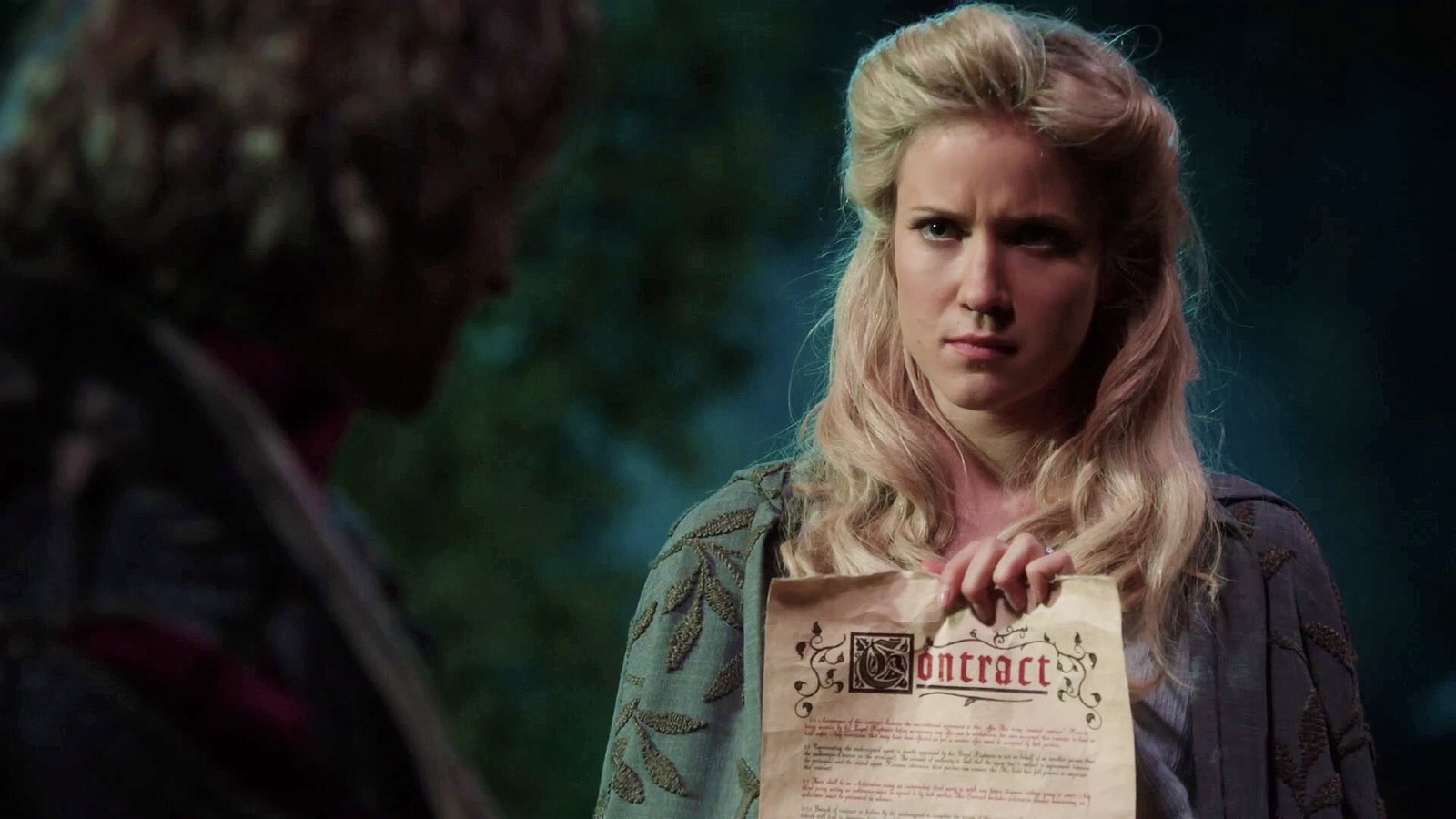
Emma takes on a case to help Ashley (Cinderella), a young, pregnant maid, escape from Mr. Gold, who demands her unborn child as payment for a deal. In flashbacks to the Enchanted Forest, we see Cinderella’s pact with Rumplestiltskin, in which she unknowingly agrees to surrender her firstborn child. Meanwhile, in Storybrooke, Emma intervenes to help Ashley regain control of her life and make her own choices.

Summary
Emma takes on a case to help Ashley (Cinderella), a young, pregnant maid, escape from Mr. Gold, who demands her unborn child as payment for a deal. In flashbacks to the Enchanted Forest, we see Cinderella’s pact with Rumplestiltskin, in which she unknowingly agrees to surrender her firstborn child. Meanwhile, in Storybrooke, Emma intervenes to help Ashley regain control of her life and make her own choices.
Key Themes
- Bargains and Sacrifices: Both in Storybrooke and the Enchanted Forest, characters make life-altering bargains, often unknowingly, highlighting a loss of autonomy.
- Maternal Rights and Agency: Ashley’s struggle to reclaim her unborn child mirrors Emma’s own experience with Henry and her complex feelings surrounding his adoption.
- Cycle of Abandonment: The episode touches on Emma’s fear of abandonment, as she relates to Ashley’s determination to keep her child against the odds.
- Power and Vulnerability: Mr. Gold and Rumplestiltskin’s deals reflect how vulnerable people are often coerced into difficult choices by those in power.
Detailed Analysis
This episode offers intriguing parallels to the circumstances surrounding Henry’s birth and adoption. Ashley’s struggle to keep her child mirrors the emotional turmoil Emma must have felt when she was pregnant in prison, with few options for herself or her son. While Emma willingly gave Henry up, Ashley’s journey to regain her child might reflect Emma’s subconscious regrets about her own decision and the feeling that Henry’s adoption was a choice made under difficult circumstances.
Bargains and Sacrifices
The recurring theme of deals with Rumplestiltskin/Mr. Gold suggests a complex, potentially exploitative system of power, with echoes of what Emma may feel toward the adoption system or society’s pressures on young mothers. Ashley’s fierce desire to keep her child might mirror a repressed part of Emma’s psyche, longing to keep Henry yet understanding why she had to let him go.
Maternal Rights and the Loss of Agency
As Ashley fights for her child, we see hints of Emma’s own pain regarding Henry’s adoption. Ashley’s struggle for independence and control over her life could represent Emma’s resentment of how her circumstances limited her choices. This could reflect a broader critique of the societal pressures on young, single mothers to relinquish control over their futures.
The Cycle of Abandonment
Emma’s empathy toward Ashley reveals her deep-seated fear of abandonment—a recurring theme that has defined her life since childhood. Just as Emma was abandoned and then later had to give up Henry, Ashley’s potential loss of her child could be an unconscious reminder to Emma of the trauma she endured in her own childhood and the painful decision to place Henry for adoption.
Related Episodes
- Episode 1.9 “True North”: Deals with abandonment and survival, as Emma helps two children find their father, resonating with her own sense of loss and self-reliance.
- Episode 3.9 “Save Henry”: Explores the adoption process and Regina’s motivation for adopting Henry, providing insight into how Henry’s adoption may have mirrored Emma’s journey.
- Episode 4.8 “Smash the Mirror”: Emma confronts her own power and identity struggles, echoing themes of choice, sacrifice, and personal agency.